

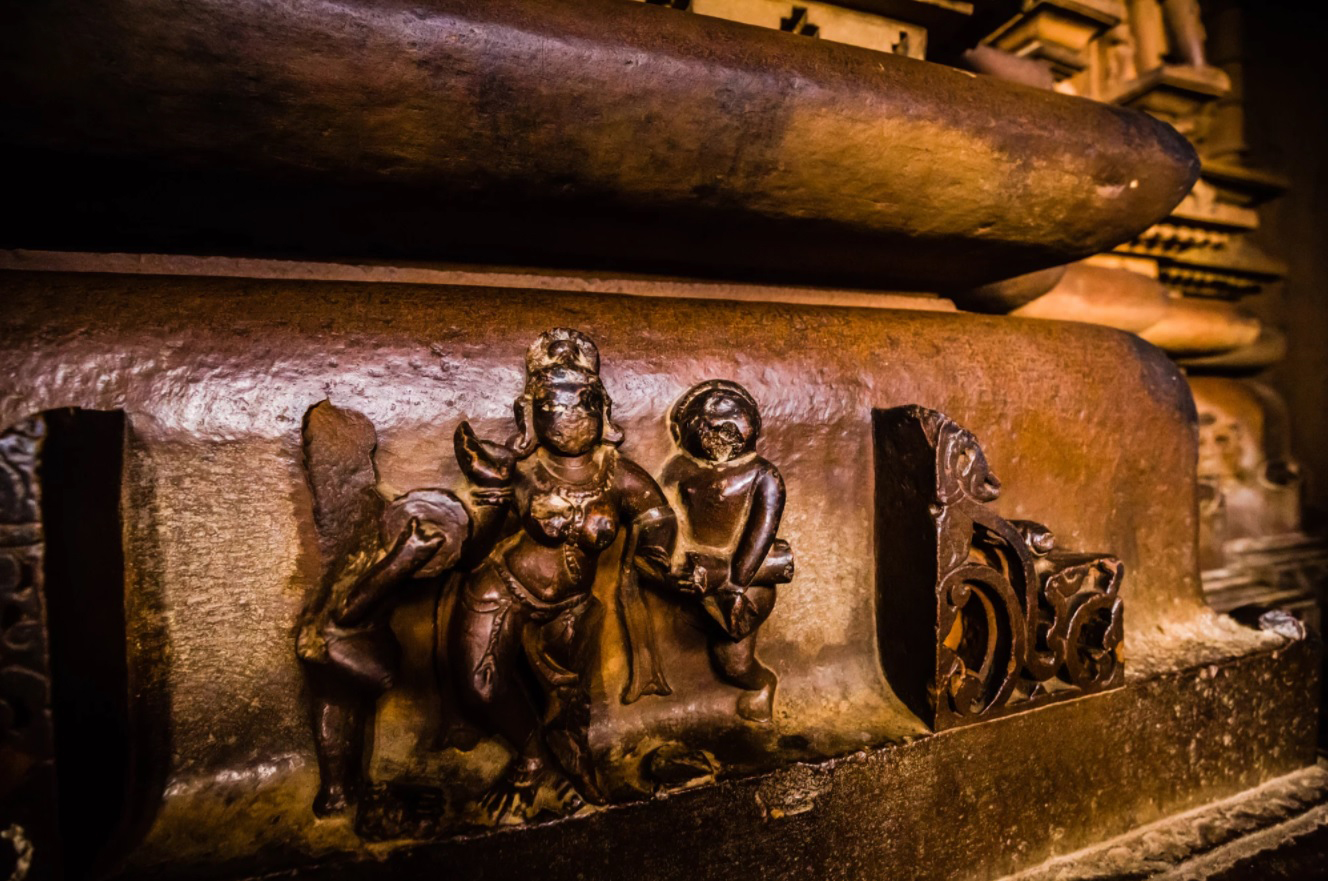
Tucked away in the heart of Madhya Pradesh, the Khajuraho Temples are one of India’s greatest cultural treasures. Recognized as a UNESCO World Heritage Site, this temple complex is celebrated for its architectural brilliance, intricate carvings, and its unique approach to portraying life, love, and spirituality. A journey to Khajuraho is not just about visiting temples—it’s about experiencing India’s timeless artistic and spiritual philosophy.
A Glimpse into History

The Khajuraho group of monuments was built between 950–1050 AD under the rule of the Chandela dynasty. At its peak, there were nearly 85 temples, spread across a 20-square-kilometer area. Today, around 20 temples remain, each one a masterpiece of design and symbolism.
The temples thrived as centers of spiritual practice, art, and culture, but over time, many were lost to neglect and natural forces. Rediscovered in the 19th century, they have since become a global symbol of India’s artistic genius.
Architectural Grandeur of Khajuraho
The temples are built in the Nagara style of architecture, characterized by tall curvilinear spires (shikharas), intricately carved exteriors, and sanctums that create a serene spiritual atmosphere.
The complex is divided into three main groups:
- Western Group – The largest and most visited, home to the majestic Kandariya Mahadev Temple, dedicated to Lord Shiva, with over 800 sculptures.
- Eastern Group – Predominantly Jain temples, including the beautiful Parshvanatha Temple, reflecting Khajuraho’s spirit of inclusivity.
- Southern Group – Smaller in size but equally captivating, featuring temples like Chaturbhuj and Duladeo.
Each temple was carefully designed to represent the cosmic order, making Khajuraho not just a religious site but a philosophical landscape carved in stone.
Sculptures That Define Khajuraho
The carvings of Khajuraho are what make these temples truly extraordinary. The walls, pillars, and ceilings are adorned with thousands of sculptures depicting:
- Deities in various forms of Hindu and Jain traditions.
- Celestial beings such as apsaras and gandharvas.
- Scenes of everyday life—farmers, dancers, musicians, and warriors.
- Erotic art, which forms less than 10% of the carvings, yet captures the most attention.
These erotic sculptures are not meant to shock but to celebrate human intimacy as a natural and divine part of existence. They symbolize the Tantric philosophy where the union of male and female energies represents ultimate cosmic balance.

The Spiritual and Cultural Significance
Beyond the carvings, the Khajuraho temples carry profound spiritual symbolism. Each temple represents the journey of the soul—from worldly desires (depicted on the outer walls) to inner purity (symbolized by the sanctum inside).
This architectural storytelling reminds visitors that life, in all its dimensions—mundane, artistic, and spiritual—is sacred.
Best Time to Visit Khajuraho
The ideal season to explore Khajuraho is from October to March, when the climate is pleasant. Key highlights include:
- Khajuraho Dance Festival (February) – A week-long celebration of India’s classical dance forms, performed under the glow of the illuminated temples.
- Light and Sound Show – An evening spectacle at the Western Group of Temples, narrating the history of Khajuraho against the stunning backdrop of Kandariya Mahadev.
Where to Stay – Syna Heritage Hotel
A visit to Khajuraho is best experienced with a stay that complements the heritage vibe. The Syna Heritage Hotel offers just that—a perfect fusion of traditional charm and modern luxury.
- Location Advantage: Just minutes away from the temple complex.
- Architecture & Ambience: Inspired by regal Indian design, the hotel reflects the grandeur of Khajuraho’s past.
- Amenities: Spacious rooms, curated dining with local and international cuisines, lush gardens, and warm hospitality.
- Experiences: Cultural evenings, personalized tours, and arrangements for attending the Khajuraho Dance Festival or safaris in nearby wildlife reserves.
Staying at Syna Heritage Hotel ensures your Khajuraho journey is not just about sightseeing but also about immersing in the region’s culture, comfort, and charm.
Why Khajuraho Should Be on Your Bucket List
- To explore some of the finest temple architecture in the world.
- To witness art that celebrates life in all its forms.
- To experience a unique blend of history, spirituality, and culture.
- To enjoy a seamless stay at Syna Heritage Hotel, where heritage meets hospitality.
The Temples of Khajuraho are not just about carvings—they are eternal stories in stone, capturing the essence of life, love, and the divine. Pairing your visit with the comfort of Syna Heritage Hotel makes the experience truly unforgettable.